
On Saturday, April 25, 2026, Syriac-Aramean youth from across the country gathered for a new edition of Abgar U’Komo – a long-awaited day that uniquely brought together football, community, and joy with our history and identity. It was a day marked by strong unity, warmth, and engagement, where young people from different parts of Sweden came together under a name that carries deep meaning in our tradition.
Already on Saturday morning, youth from around ten different cities began arriving at Ektorpshallen in Norrköping. The hall quickly filled with movement, anticipation, and excitement as players, supporters, and officials took their places for a day that would come to carry far more than just sporting significance. At the entrance, participants were welcomed by volunteers registering attendance, guiding visitors, and staffing sales stands, while the corridors gradually filled with chatter, laughter, and greetings among youth who had traveled from across Sweden to take part in this year’s tournament.
Today, Abgar U’Komo is more than just the name of a youth football tournament. It is a name that takes us back to the early centuries in Urhoy, the historic Edessa (now known as Urfa in Turkey), where one of the most significant stories in our tradition has its roots. According to Syriac Christian tradition, King Abgar U’Komo corresponded with our Lord Jesus Christ, and through generations this story has lived on as part of our collective memory.
For us as Arameans, this story carries deep symbolism. It reminds us of our people’s early connection to the Christian faith, to Urhoy, and to the heritage that has shaped our history. This is why the day becomes something more than just football and celebration. When our youth gather under Abgar’s name, it is also a beautiful reminder of who we are, where we come from, and the heritage we wish to pass on to future generations.
Throughout the day, more than 200 players gathered, along with just as many engaged spectators, to take part in a tournament marked by energy, joy of play, and strong community spirit. The pitch was filled with talent, determination, and teamwork—but above all, with young people creating something greater together than just a tournament.
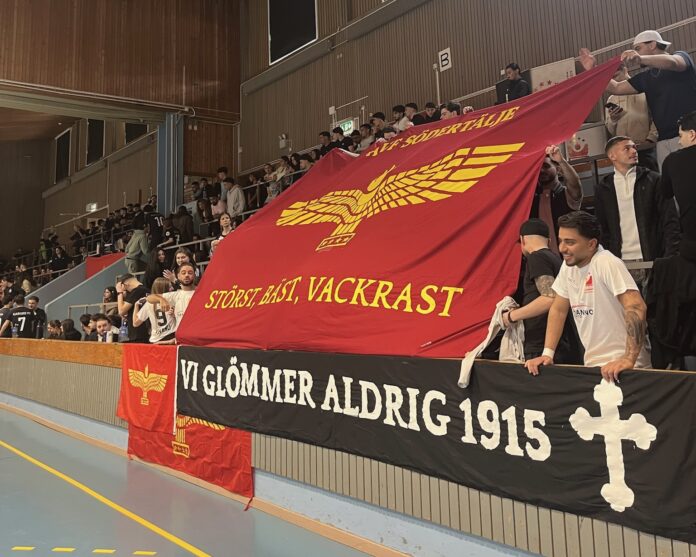
The football tournament was also clearly marked by cultural expression, as the youth wore sportswear featuring symbols such as the Aramean eagle and the names of Aramean villages and places deeply rooted in our collective memory. On several jerseys and symbols, the holy cross could also be seen—a quiet yet clear reminder of the faith and history that unite our people. Already here, it was evident that Abgar U’Komo was about far more than futsal.
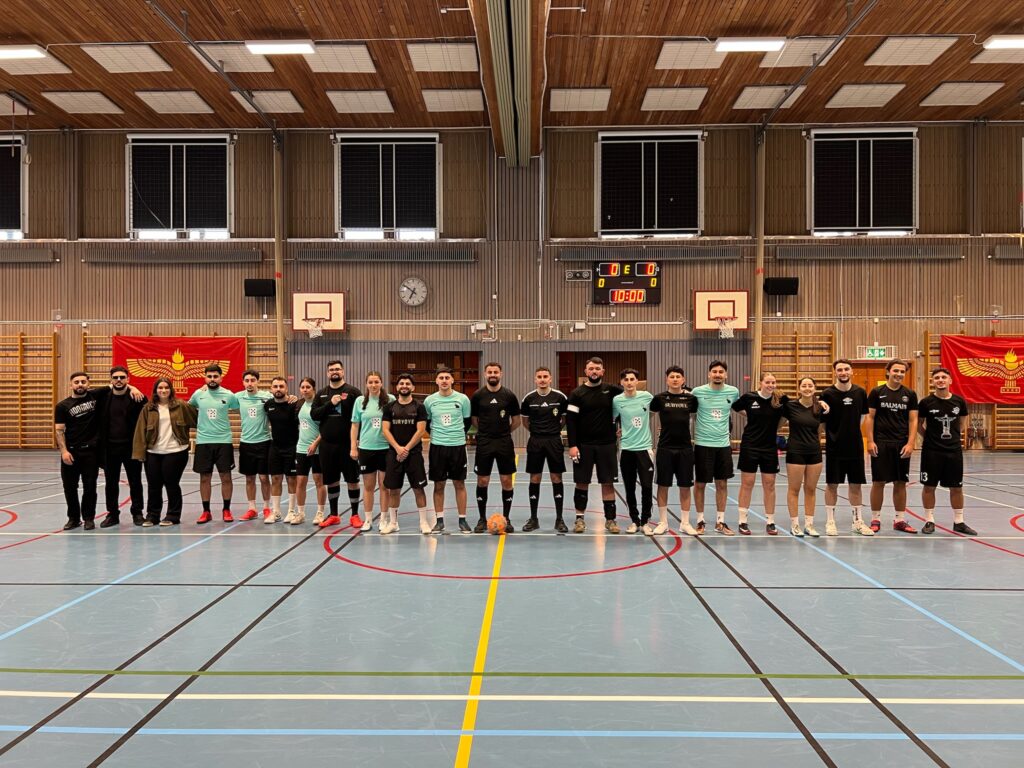
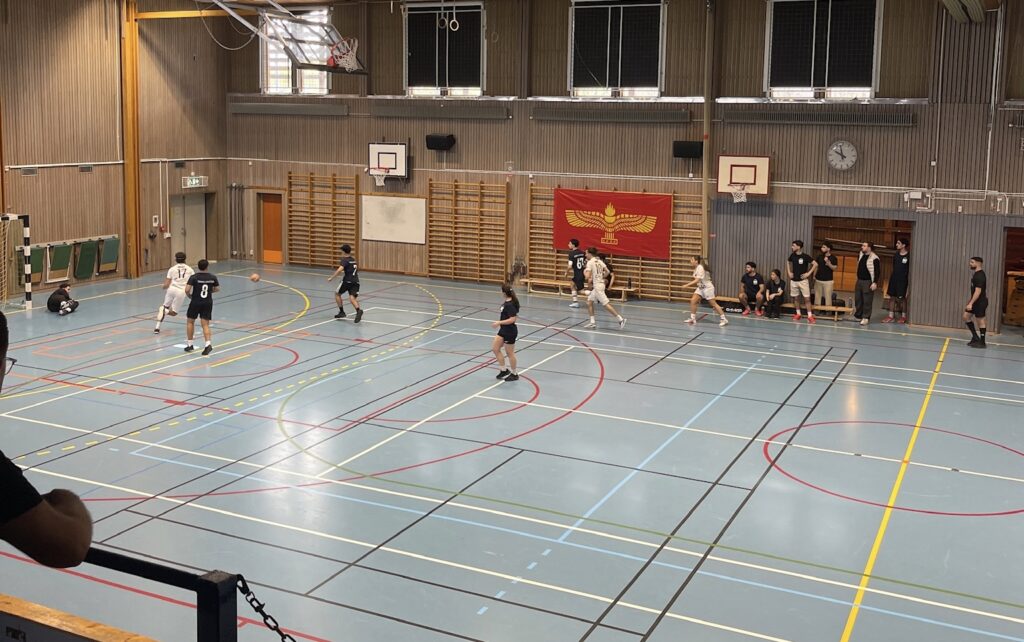
Further inside the hall, the pitch awaited. The first match, between Midyat FC and SAUF Enköping, set the tone for the rest of the day. Players and spectators moved into the sports hall as the officials announced the teams. Syriac flags waved from the stands, some youth brought instruments, and chants began softly before rising in strength. When the whistle finally blew and the match kicked off, it was clear from the start that the pace, intensity, and presence of the crowd would define the entire tournament.
Throughout the rest of the day, matches continued at a high tempo. Some were close and decided in the final minutes, while others took a clearer direction early on. Regardless of the results, the players showed great intensity and strong commitment, and every goal was met with powerful reactions from both the audience and teammates. Once again, it became clear that the tournament gathered not only skilled players, but also youth with a deep sense of belonging and pride.
The audience played a central role throughout the event. Different supporter groups gathered behind their respective teams and created a vibrant atmosphere through songs, chants, applause, and music. At times, the noise level rose so high that the entire hall seemed to vibrate with engagement. This presence from the stands gave the tournament a special energy and turned the day into a true meeting place where both players and spectators became part of the same community.
After several strong and impressive performances, it was ultimately José FC from SAUF–Norrköping Folkets Park that claimed victory in this year’s tournament. The team carried not only the trophy at the end of the day, but also the joy, pride, and sense of community that Abgar U’Komo has come to symbolize year after year. Their victory thus became part of a greater whole—a day where competition and success went hand in hand with belonging, unity, and respect for the tradition that brought the youth together.
“It feels fantastic to win, but the most beautiful part of the day was really the sense of community. You could tell that this meant a lot to everyone present. Being able to play, meet youth from all over Sweden, and at the same time carry forward the name of Abgar U’Komo makes the victory even more special,” said a representative of the winning team José FC after the award ceremony.
Throughout the day, there was also a strong sense of pride in once again bringing together youth from across Sweden around an event that means so much to so many. Over the years, Abgar U’Komo has grown into more than a recurring event—it has become a living tradition where sport, culture, and identity meet in a way that strengthens the entire youth movement.
“What makes Abgar U’Komo so special is that it’s not just about football. It’s about bringing our youth together, strengthening the sense of community, and giving them a living connection to our history and identity. When we see so many young people gathering from across Sweden in this way, we feel both pride and hope for the future,” said federation chairman Jonas Ergül.
When the day’s matches were completed, the celebration continued in the evening with a gala for all teams and participants. The gala became a festive and appreciated conclusion to a day that had already united so many young people in joy and community. It gave participants the opportunity to gather in a different setting, continue socializing, and celebrate together the strong atmosphere that had characterized the entire day.
The evening concluded with a vibrant cultural celebration where participants had the opportunity to gather, socialize, and celebrate together. The atmosphere was filled with warmth, joy, and a strong sense of community, while conversations and laughter shaped the spirit of the night. Bar Gabriels provided the evening’s entertainment, creating an incredible energy through his music that quickly filled the dance floor and brought people together. After a day marked by engagement and togetherness on the field, the evening became a natural extension of what Abgar U’Komo truly represents – strengthening the bonds between people and creating memories that will live on for a long time.
SAUF–Norrköping Brånnestad served as this year’s hosts and, through their strong commitment, contributed to making both the day and evening so memorable. Through their efforts, participants experienced not only a well-organized tournament, but also a warm and joyful conclusion that beautifully rounded off the entire event.
“We are incredibly happy and grateful to have hosted this year’s Abgar U’Komo. A great deal of work went into preparing for this day, and seeing the youth gather with such joy, respect, and community made it all worthwhile. For us, it means a lot to contribute to something that strengthens our entire youth movement,” said a representative of SAUF–Norrköping Brånnestad.
In this way, the evening became more than just a conclusion—it became an extension of the day’s message of community, identity, and belonging. In a time when everyday life often separates people, Abgar U’Komo once again served as a reminder of the value of coming together around something shared—especially our culture, our history, and our identity.
The day stood as a living manifestation of unity, pride, and hope for the future. Abgar U’Komo once again demonstrated that it is not just a football tournament. It is a tradition that carries history, strengthens identity, and unites youth from across Sweden.
Saturday, April 25, 2026, was therefore not only a successful day of football and celebration, but also a beautiful reminder that our history continues to live on through the younger generations who carry it forward with joy, pride, and unity. And as the day both began and ended in the same spirit, the message was clear to everyone present:
Tihe Suryoye!
Editorial Team