


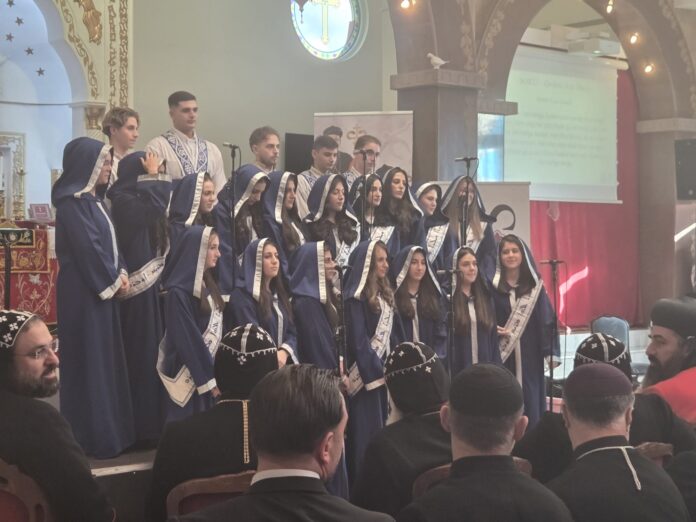
There was something particularly symbolic about this year’s choir festival. As the Syriac Orthodox Church Youth Association in Sweden, SOKU, celebrated its 30th anniversary, the festival returned to the place where it all once began.
Thirty years ago, the first choir competition was held in Örebro. Three decades later, it returned – and when this year’s winner was announced, St. Mary’s Church in Örebro stood at the top. The circle was complete.
The festival became the culmination of an anniversary celebration that, in many ways, was something truly extraordinary. Around 800 guests gathered, the church was filled to capacity, and no fewer than 370 participants performed in a total of 13 choirs – a new record. Eighteen parishes were represented. Five bishops attended alongside priests, young people, families, and representatives of parishes and organizations from different parts of Sweden.
It was a powerful event and a fitting celebration of three decades of youth work. Already during the day, there was a sense that the occasion had grown into something greater than a traditional choir festival. Generations came together around faith, music, language, and Syriac culture.
Since then, praise and appreciation have poured in from participants, guests, and visitors. In conversations during and after the festival, the same impression was repeatedly expressed: this was a memorable day, characterized by joy, fellowship, spirituality, and an impressive collective effort by young people and adults alike.
“Begotten, Not Made”
Each year, the choir festival is built around a common theme. This year’s theme was taken from the Nicene Creed:
“Begotten, not made” – Ilido u lo ‘bido.
These words relate to one of Christianity’s central confessions concerning Christ and gave the choirs an opportunity to interpret the theme through text and music rooted in the tradition of the Syriac Orthodox Church.
The festival is therefore about much more than singing and competition. Through the choirs, new generations encounter the Church’s liturgy, language, and musical heritage. Texts and melodies that have been carried through generations are given new voices and passed on.
And this year, those voices were more numerous than ever.
A total of 370 participants came together in 13 choirs – a record in a year when SOKU was also celebrating its first 30 years.
Seeing so many children and young people gathered around the faith and music of the Church was, in itself, one of the most powerful images of the festival.
Örebro Takes the Victory
When the results were finally announced, the symbolism was almost complete. St. Mary’s Church in Örebro won this year’s choir competition.
The fact that the parish in the city where the first competition was held also emerged as the winner 30 years later gave the anniversary a special significance. Judging by the reactions following the competition, the victory also enjoyed broad recognition. Many of those we spoke with felt that Örebro delivered an exceptionally strong performance and that the victory was well deserved.
Behind the performance was extensive work and a clear grounding in the Church’s liturgical and musical tradition.
The text was taken from the Church’s weekly prayer book, Šḥimo, specifically from Wednesday morning prayer. It is not a work with a separate title, but rather selected passages from a larger morning prayer. The text was adapted by Malfono Zakay Aydin to fit the melody while preserving its liturgical meaning.
The melody was composed by musician and Malfono Emanuel Bakirci in accordance with the musical traditions of the Church and based on the Nahawand maqam. Emanuel Bakirci, together with Cornelia Sander, trained and directed the choir in preparation for the festival.
The performance begins with the words:
“Glory be to the Holy Father who sent the Holy Son.”
The text continues with the story of the Incarnation – how Christ became human – before moving into a poetic tribute to the Virgin Mary:
“Blessed are you, Mary, who gave birth to the Son of the living God. Blessed are you, adorned vessel, in whom the merchant descended and dwelt. Blessed are you, perfect palace, who received the architect of heaven.”
It continues by describing how Mary carried Him while her virginity and purity were preserved, and concludes with a blessing of the Lord who came from her.
In Örebro’s performance, an ancient liturgical text thus met a new musical expression. At the same time, it became an image of what the entire festival represents: that what has been inherited should not merely be preserved, but also lived and carried forward by new generations.
30 Years of Youth Work
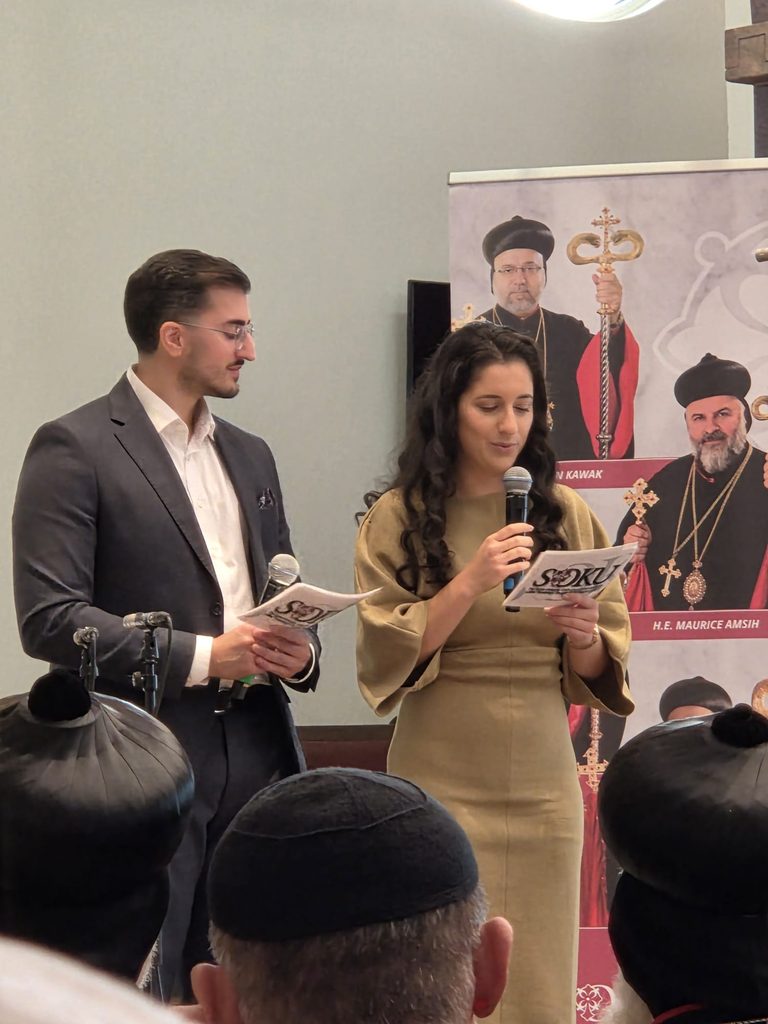
This year’s festival held particular significance as it coincided with SOKU’s 30th anniversary.
For three decades, the youth association has brought together and engaged generations of young people within the Syriac Orthodox Church in Sweden. Over the years, the choir festival has become one of the clearest expressions of this work.
This year’s anniversary also demonstrated the scale the festival has reached. Around 800 guests, 370 choir participants, 18 parishes and 13 choirs, together with a church filled to capacity and five bishops in attendance, created a setting worthy of a 30th anniversary celebration.
But behind the numbers lies something more important.
There are children and young people learning songs, texts, and language. There are choir directors devoting countless hours to rehearsals. There are parents, priests, leaders, volunteers, and dedicated individuals who make sure that everything works. And there are parishes that, year after year, create space for the next generation.
Together, they have made these 30 years possible.
An Event Many Can Be Proud Of
SOKU Sweden deserves great recognition for the anniversary celebration and for the long-term work that has carried the youth association forward over three decades. The same applies to the local SOKU organization in Örebro, St. Mary’s Church, and all those who worked before, during, and after the festival to make the day possible.
Behind an event of this magnitude are countless hours of work that are rarely seen: planning, rehearsals, technical arrangements, logistics, welcoming guests, and all the small and large efforts that together create the whole.
Everyone who contributed to this day in any way has every reason to feel proud of what was achieved together.
The many appreciative reactions afterwards also showed that the festival left a lasting impression. For many, it became an occasion where fellowship was strengthened and where both spirituality and Syriac culture took center stage.
It was not only a celebration of what has been, but also an inspiration for what is yet to come.
The Circle Was Completed – But the Story Continues
A 30th anniversary naturally means looking back. It is about remembering and appreciating those who once began the journey, those who continued building upon it, and all the people who have carried the work forward over three decades.
But for a youth organization, an anniversary must also be about the future.
When 370 participants from 18 parishes come together and fill a church with a language, a faith, and a musical tradition that have been passed down through generations, the anniversary also becomes a promise of continuity.
Thirty years ago, the choir competition began in Örebro.
Thirty years later, it returned to where it all began. The church was filled. A new record was set. Thirteen choirs from 18 parishes came together. 370 voices became one. And when the winner was announced, it was St. Mary’s Church in Örebro.
It would have been difficult to write a more symbolic conclusion to SOKU’s first 30 years.
For if this weekend reminded us of where we come from, above all it showed that there is a new generation ready to carry our faith, our spirituality, our culture, and our heritage forward into the future.
You can watch and listen to this year’s winners, SOKU St. Mary’s Church in Örebro, on Bahro Suryoyo’s social media channels.