
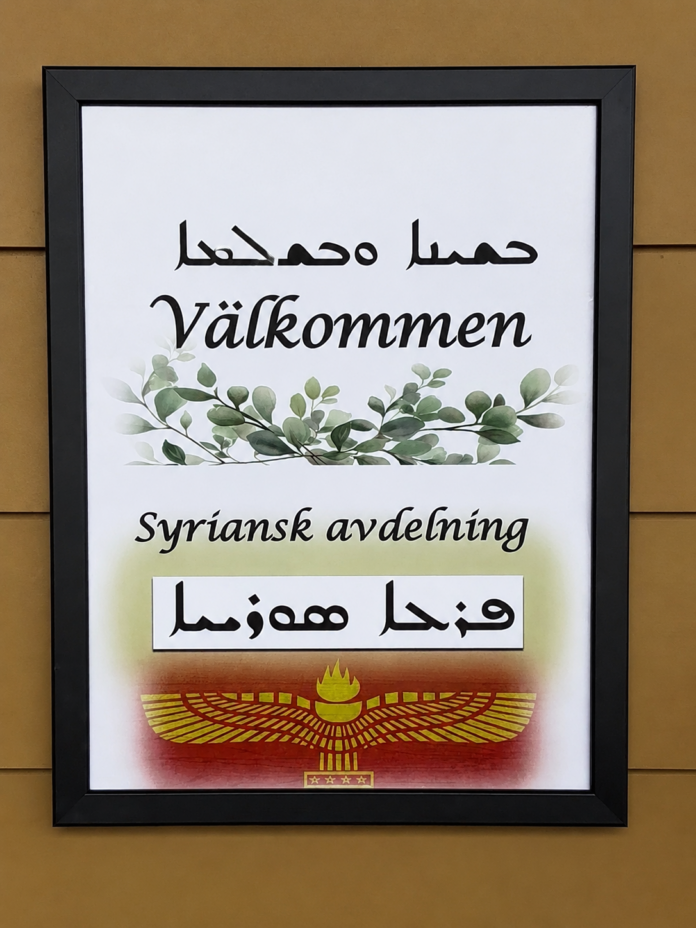
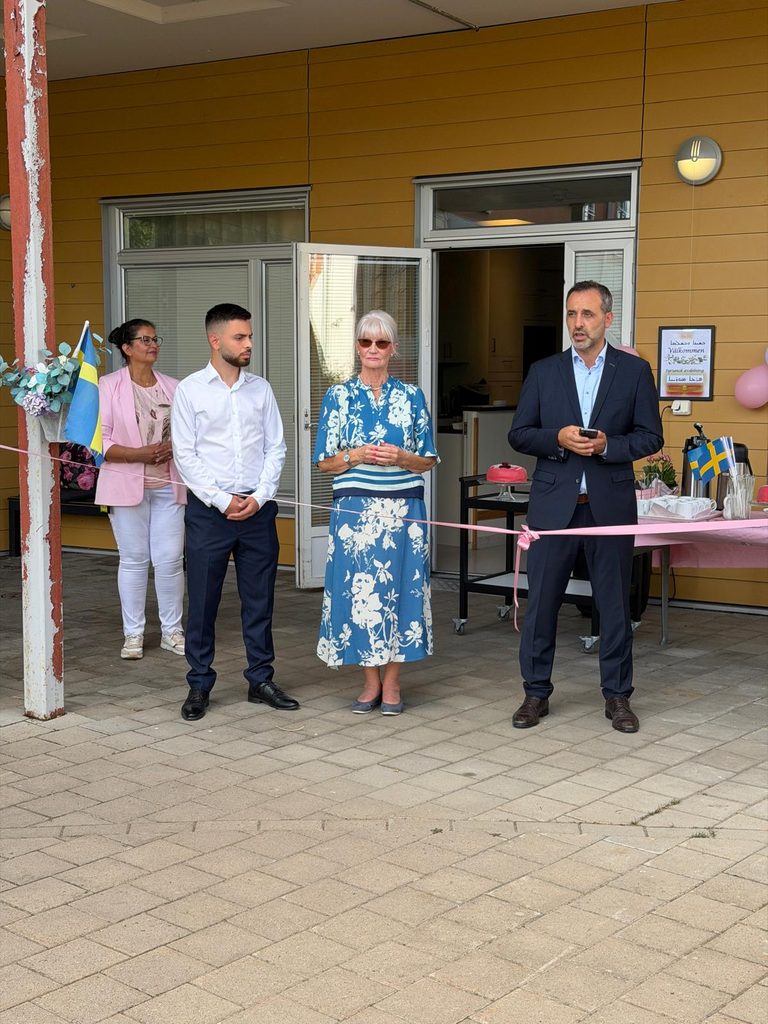
On 27 August, Sweden’s first elderly care unit with an Aramaic-language profile was inaugurated at Tornet Care and Nursing Home in Botkyrka. The initiative marks a milestone for the Aramean community in Sweden and highlights an increasingly important question: how can elderly care take into account language, cultural background and each individual’s personal history?
The Aramean community has been established in Sweden for more than half a century. The first larger groups arrived during the 1960s and 1970s, and over the following decades one of Europe’s largest Aramean diaspora communities developed in the country. Associations were founded, congregations were organised, churches were built, and over time an extensive network of activities emerged within culture, sports, business and other areas of society.
The generation that stood at the centre of this development has now grown older. Many of those who arrived in Sweden as young adults are today in their seventies, eighties or nineties, and the need for elderly care is increasing. The inauguration at Tornet should be viewed against this background. For the first time, Sweden now has an elderly care unit where the Aramaic language is an explicit part of the unit’s profile and daily activities.
This is significant for several reasons. Language in elderly care is first and foremost a matter of communication and safety. An elderly person must be able to describe their needs, explain pain or illness, understand instructions and communicate with the staff responsible for their daily care. For people who have Swedish as a second language, this can become increasingly difficult with age.
The issue becomes particularly relevant in cases of dementia and other forms of cognitive decline. Languages acquired later in life can sometimes weaken, while a person’s mother tongue, learned during childhood, may remain accessible for considerably longer. Someone who has communicated well in Swedish throughout much of their adult life may therefore become increasingly dependent on their mother tongue later in life.
From this perspective, an Aramaic-speaking elderly care unit is not primarily a symbolic or cultural initiative. It can serve a direct and practical function in the provision of care. The ability to understand and to be understood can reduce misunderstandings and provide staff with better conditions for assessing and responding to the needs of elderly residents.
Language Is Only One Part
At the same time, elderly care with a specific language profile involves more than having staff members who speak Aramaic. A person’s background also influences which environments, foods, holidays, music and social contexts feel familiar. A well-functioning profile therefore requires a broader understanding of the people who live in the unit.
For many members of the older Aramean generation, for example, the church and community organisations have played a central role throughout much of their lives. Congregations have served not only a religious function but also as social meeting places where language, culture and community have been maintained. Understanding these contexts can also be relevant in elderly care, without assuming that every individual has the same interests, beliefs or needs.
Individualisation remains essential. Two people with the same linguistic or cultural background do not necessarily want or need the same type of care. An Aramaic-speaking profile should therefore not mean applying a predetermined cultural template to residents. Rather, it should provide staff with additional tools to understand each individual person and their background.
A Generation That Helped Build Aramean Life in Sweden
The inauguration also has a historical dimension. The generation that is now beginning to require elderly care is largely the same generation that built organised Aramean community life in Sweden.
The first decades were largely about establishing a new life. Many worked in Swedish industry, restaurants, services and other sectors of the labour market while raising families in a new country. At the same time, an extensive network of associations and congregations was developed. Premises had to be secured, organisations established and financial resources raised, often during a period when the community itself had limited resources.
The following generation grew up under different circumstances. Children and grandchildren pursued higher education and established themselves in business, the public sector, academia, politics, culture and sports. Today, the Aramean community is an established part of Swedish society.
This also means that new questions are emerging. For many years, much of the organisational focus was placed on young people, education, culture, language and integration. As the first generation now reaches advanced age, issues concerning elderly care are becoming an increasingly important part of the same development.
Sweden’s first Aramaic-speaking elderly care unit is therefore a milestone precisely because it marks this transition.
An Initiative Pursued for Several Years
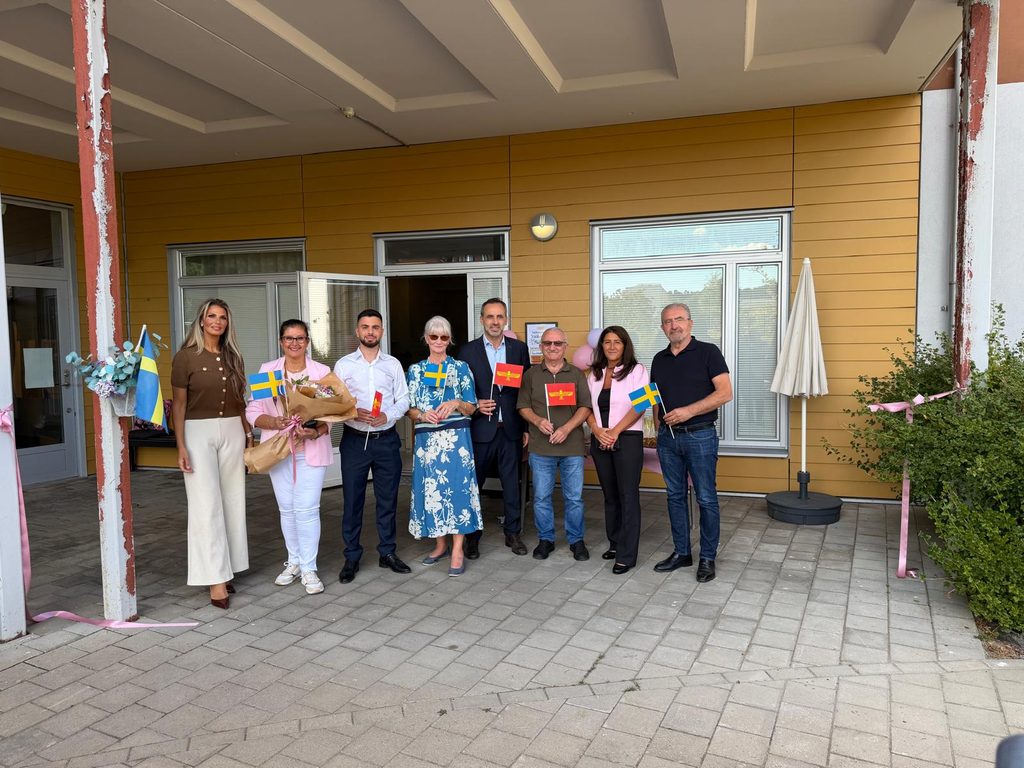
The establishment of the unit at Tornet was preceded by a political process that has continued for several years. The initiative for elderly care with an Aramaic-language profile was originally taken by the Christian Democrats in Botkyrka, and the issue has been actively pursued by Yusuf Aydin (Christian Democrats).
Through the current political cooperation within Botkyrkas bästa, the initiative has now been implemented.
Yusuf Aydin attended the inauguration on 27 August together with Kia Hjelte of the Moderate Party, Chair of the Health and Social Care Committee, and Brayam Danho of the Moderate Party. The presence of representatives from both parties also reflected the political cooperation through which the initiative has now become a reality.
The fact that the process has taken several years from initial proposal to implementation is not particularly surprising. Establishing a new profile within elderly care requires more than a political decision. Staffing, language skills, professional competence, organisation and long-term planning all need to be in place.
The real measure of the initiative’s success will therefore not be the inauguration itself, but how the unit functions over time and how the care is experienced by residents and their families.
The Aramean Civil Society Was Represented
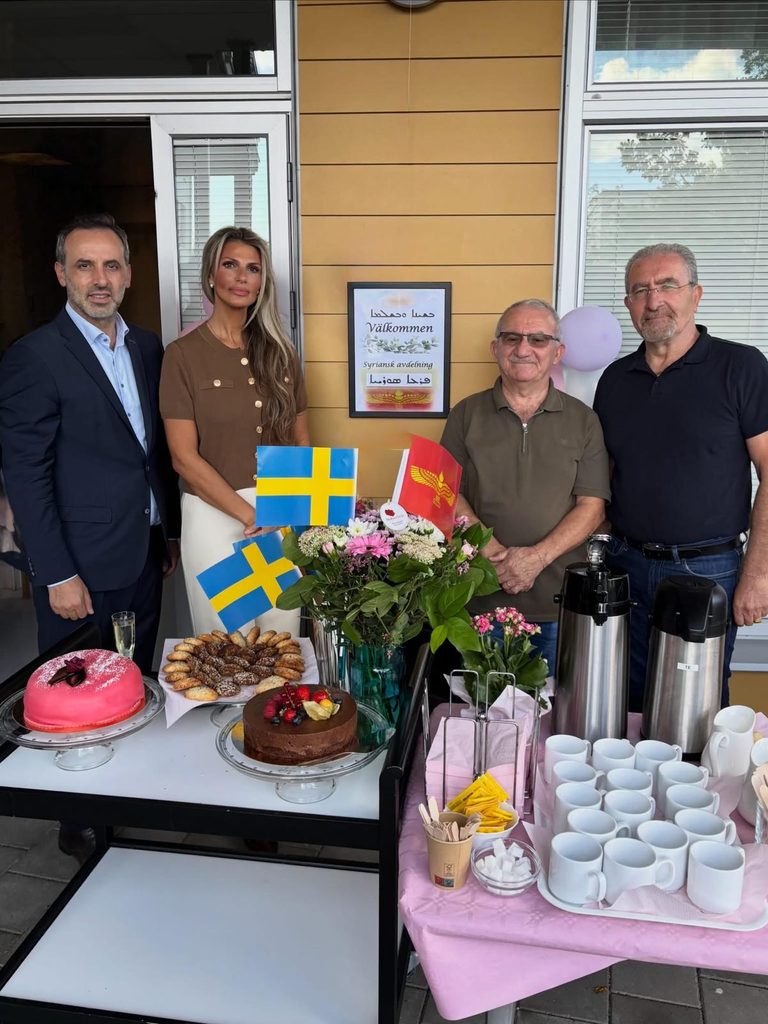
Representatives of Aramean civil society also attended the inauguration. The church board was represented by its Chairman Said Bchar, Vice-Chair Rima Cicek and board member Seeman Antar.
Civil society can also have a relevant role around an initiative of this kind. Aramean congregations and associations have decades of experience in organising activities for older people and working with issues related to language, culture and community. Cooperation between elderly care services, families and civil society can therefore contribute to activities and social interaction for residents, provided that this is based on the wishes and individual needs of the elderly themselves.
There is also another issue that can sometimes receive too little attention in discussions about elderly care: loneliness. High-quality elderly care is not limited to healthcare, medication and practical assistance. The social dimension is also important, particularly for people who previously had an active family, congregational or community life.
A New Phase for the Aramean Community in Sweden
The inauguration at Tornet also illustrates how the Aramean presence in Sweden has changed over time. The issues that were central to the community forty or fifty years ago are not necessarily the same as those of today.
In the early years, much of the focus was on establishing a new life, finding employment and housing, learning the language and securing the possibility of organising associations and congregations. Later, education, representation and participation in Swedish society became increasingly important.
Elderly care has now become another part of that development.
This is a natural consequence of an immigrant community becoming a permanent and multigenerational part of a country. People do not remain immigrants forever. They build their lives in Sweden, have children and grandchildren here and eventually grow old here.
The institutions that meet people in the later stages of life therefore also need to develop in line with the population they serve.
This does not mean that language or cultural background should replace the professional standards required in elderly care. Quite the opposite. Fundamental quality, medical safety, competent staff and high standards of care must always come first. Language skills and cultural understanding can, however, form part of that same quality.
This is also where the significance of the initiative at Tornet should primarily be understood.
A Milestone – But the Work Begins Now
The date of 27 August 2026 can now be recorded as the day Sweden’s first elderly care unit with an Aramaic-language profile was inaugurated. In itself, this is historic and represents a clear milestone in the more than fifty-year history of the Aramean community in Sweden.
An inauguration, however, is only the beginning.
What matters from this point forward is the substance of the initiative: ensuring sufficient language competence, maintaining high standards of care, placing the individual needs of residents at the centre and making sure that the Aramaic-language profile becomes a genuine part of everyday life rather than simply a label attached to the unit.
If these ambitions are fulfilled, the initiative can demonstrate something important about what modern, person-centred elderly care can look like.
For an elderly person in need of care, broader societal perspectives are ultimately secondary. What matters is far more concrete: receiving the right assistance, feeling safe and being able to communicate with the people around them.
For the first generation of Arameans in Sweden, this also represents something that was probably far from their minds fifty years ago when they were trying to establish themselves in a new country: the possibility of one day growing old in Sweden while being able to receive parts of their care in their own mother tongue.
That is where the real significance of 27 August lies.
A new unit has opened at Tornet Care and Nursing Home. At the same time, another chapter has been added to the story of the Aramean community’s establishment and development in Sweden.
This time, that chapter is about the right to a safe and dignified old age.v